My Account

September 26, 2026
The Tyre Size Upgrade Checklist to Use Before Buying Tyres Online
Reviewed By
Vehicle Tyre Care Specialist, YallaTyre
Michael Krikken supports YallaTyre's operations, helping customers select genuine tyres suited to their vehicle. He ensures trusted tyre solutions and excellent customer support.
One of the most scrutinized parts of vehicle tests in the UAE is tyres. Regardless of whether you are renewing your registration in Dubai, Abu Dhabi, Sharjah, or any other emirate, tyre condition is a significant determinant of passing or failing the inspection.
This is the assumption many drivers make that once a tire has visible tread, it will pass automatically. Nevertheless, tread depth is just one of the things that is inspected at RTA testing centers. Age of tires, where they have been used, wear, compatibility of sizes, and even structural damage can all lead to failure during inspection.
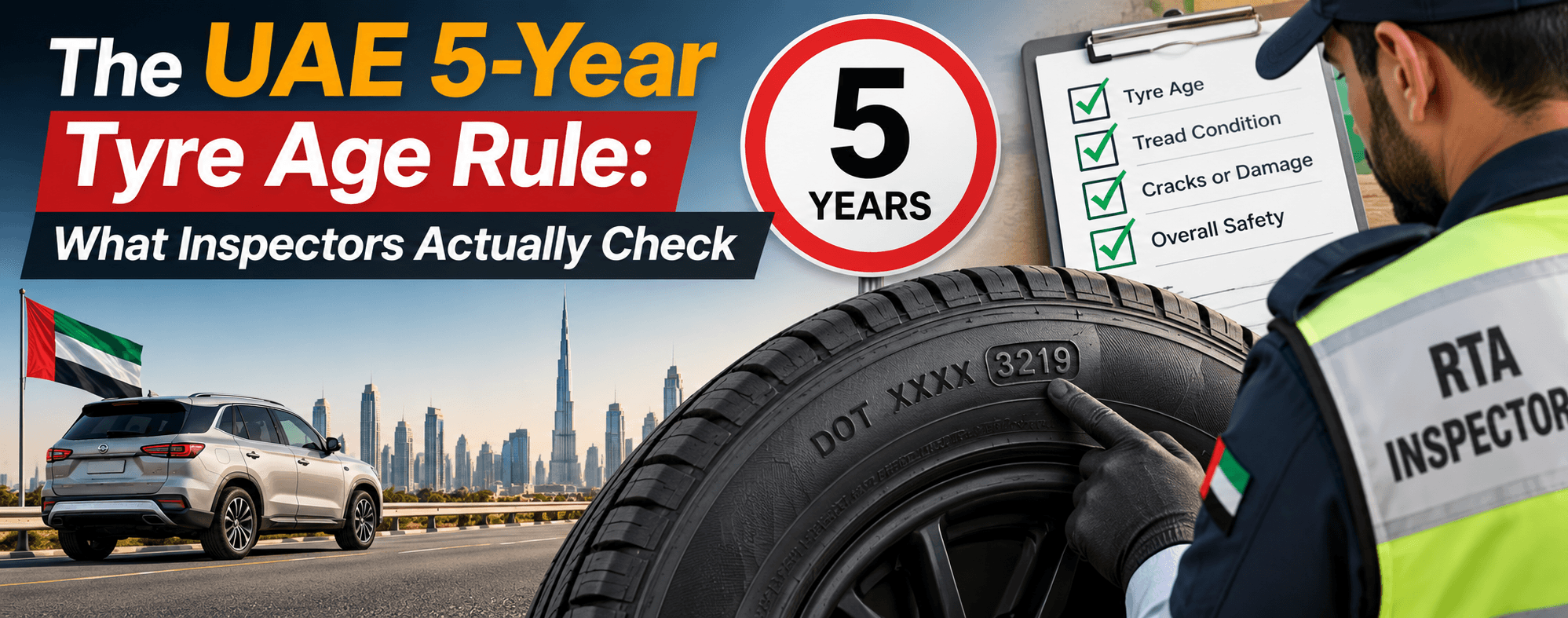
In 2026, authorities continue to place strong emphasis on tyre safety, as braking performance, handling, and overall road safety depend heavily on tyre condition. During vehicle inspections, car tyres that exceed the applicable age limits (commonly up to 5 years in Dubai and most UAE emirates, and up to 3 years in Abu Dhabi for certain inspection requirements), show structural damage, or do not meet the minimum tread depth requirements may result in a failed inspection.
Being aware of these requirements helps drivers prevent unforeseen inspection failures, enhance road safety, and make suitable choices when buying tyres in the UAE
The only component of a vehicle that is in direct contact with the road is the tyres. Their condition affects vehicle stability, braking power, fuel consumption, and driver control.
Important reasons why tyre safety is important:
That is why tyre checks are an important part of the vehicle testing procedure in the UAE.
Drivers need to be familiar with the major tyre-related standards in the UAE before visiting a vehicle inspection center.
Vehicles fitted with tyres that exceed the applicable age limit may fail inspection regardless of remaining tread depth. In most UAE emirates, tyres older than 5 years from the manufacturing date are generally considered non-compliant, while Abu Dhabi may apply a stricter limit of up to 3 years for vehicle inspection requirements. UAE authorities consider tyre age a significant safety concern because rubber naturally deteriorates over time, especially when exposed to extreme temperatures and harsh driving conditions. As tyres age, their grip, flexibility, and structural integrity gradually decline, increasing the risk of tyre failure and road accidents.
The minimum legal tread depth for passenger cars is 1.6 mm. Tyres with a smaller tread can be tested as failing, since reduced tread affects grip and braking performance.
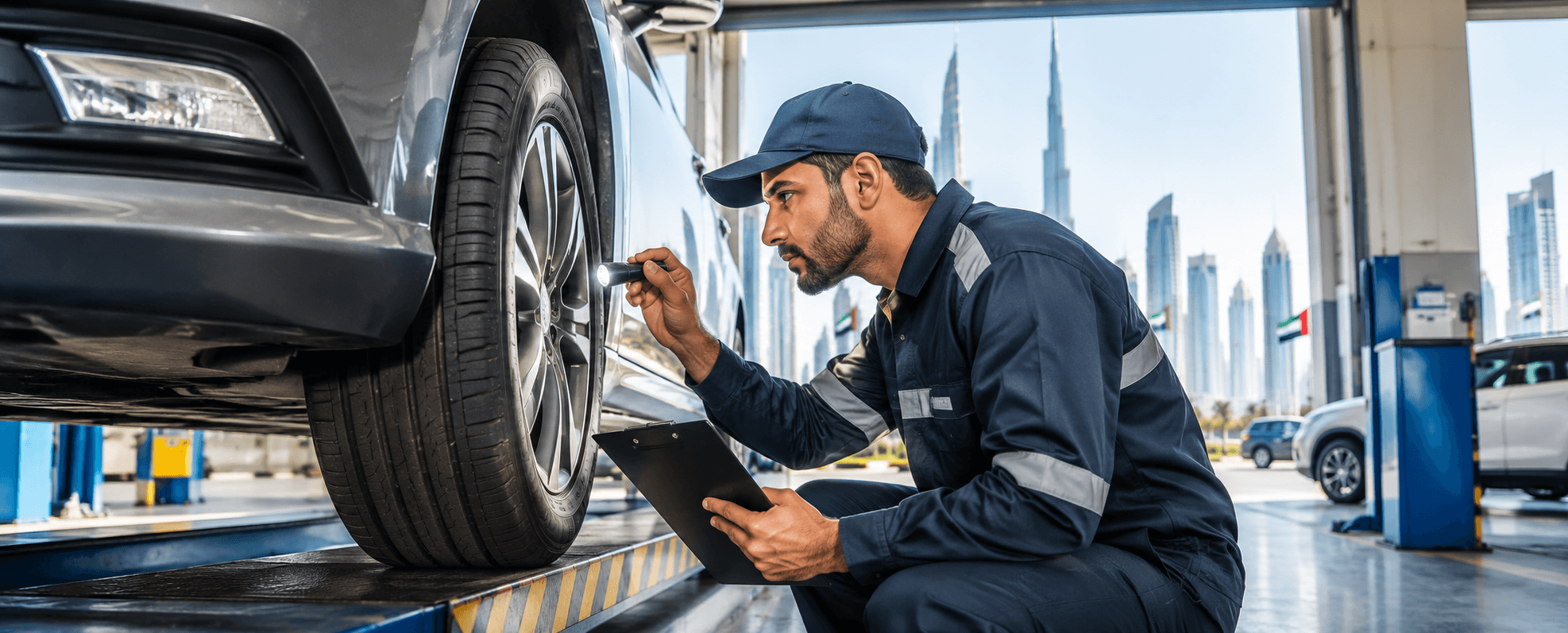
Inspectors search for cuts, cracks, bulges, burnt cords and other damages that may impact the integrity and safety of tyres.
Tyres should be selected according to the specifications of the manufacturers in terms of size, load-carrying capacity, and performance. The wrong type of tyres can pose handling and safety issues.
Most vehicles do not pass inspection due to serious mechanical problems but rather tyre related problems, which could have been detected before.
Tyre age is one of the most frequent causes of inspection failure. Tyres that seem to be healthy may result in failure once they reach a certain age beyond the allowed limit.
The failure of tyres whose tread depth is less than the legal limits is due to their inability to give satisfactory grip when braking or when dealing with wet roads.
Uneven wear often indicates alignment or suspension issues. Considerable irregular wear patterns can be noted during inspection.
Tyre sidewall cuts, bubbles, bulges, and cracks are regarded as serious safety issues and usually result in an instant failure.
Installation of tyres that are not specific to the vehicle can cause a hit to stability and handling, resulting in an inspection issue.
Not all drivers know that it is easy to check the age of tyres. All the tyres have a DOT code on their sidewalls. The last four digits indicate the week and year of manufacture.
Example:
When the tyre is above five years old since the date of manufacturing, then replacement is usually necessary to keep it in compliance.
The UAE climate increases the aging of tyres as compared to most other nations.
A few red flags indicating that tires might fail during vehicle testing are present.
An inspection prior to your appointment can help boost your chances of passing the first attempt.
The acquisition of quality tyres will contribute to the success of the inspection process and overall driving safety.
Consistent tyre care minimizes the risk of inspections and enhances year-long safety.
To pass a vehicle inspection in the UAE, there is much more than just having visible tread on the tyres. Officials check the age of the tyres, tread depths, structural integrity, wear, and roadworthiness. Tyres that are more than five years old, those with less than the minimum tread depth, and tyres with cracks, bulges, or irregular wear may all fail inspection.
Proper maintenance of your tyres will enhance your safety, prevent delays in registering your vehicle, and ensure that you do not violate the rules of the UAE.
To drivers seeking high-quality car tyres UAE, reputable Tyres Brand sales, affordable prices for car tyres in UAE, and reliable tyre replacement services, YallaTyre offers the best tyre brands, professional tyre fitting, and wheel balancing, as well as tyre knowledge services within the UAE.
We assist motorists in selecting quality tyres that satisfy the road conditions as well as vehicle inspection requirements of the UAE.