October 30, 2026
Low-Profile Tyres in the UAE: Style, Comfort & Rim Damage Explained
Reviewed By
Vehicle Tyre Care Specialist, YallaTyre
Michael Krikken supports YallaTyre's operations, helping customers select genuine tyres suited to their vehicle. He ensures trusted tyre solutions and excellent customer support.
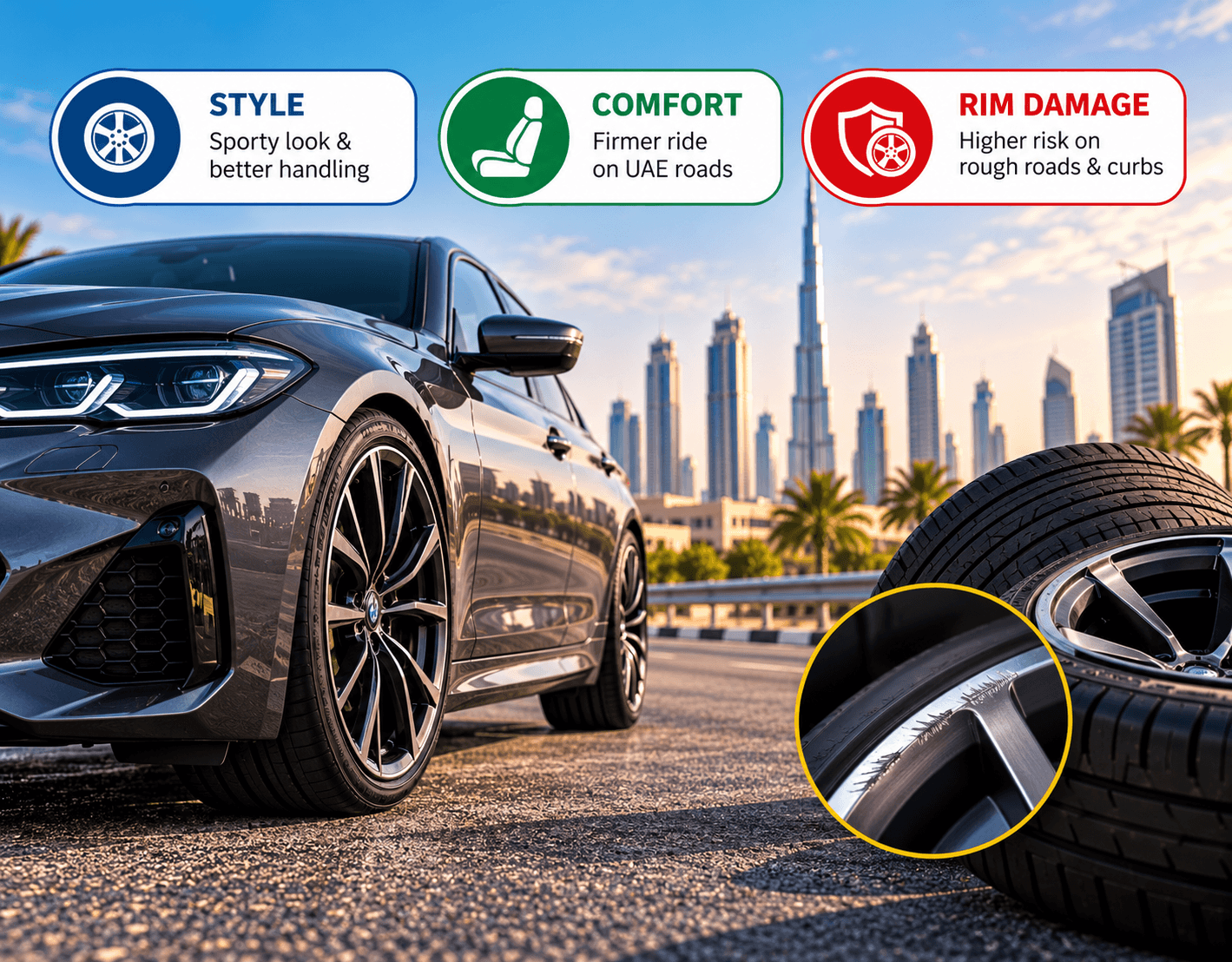
Low-profile tyres can give a car sharper steering response and a sportier look, but their shorter sidewalls offer less cushioning against potholes, kerbs, and uneven road surfaces. They can suit driving in the UAE when approved for the vehicle and properly maintained. Correct fitment, tyre pressure, load capacity, and careful driving help reduce the risk of tyre and rim damage.
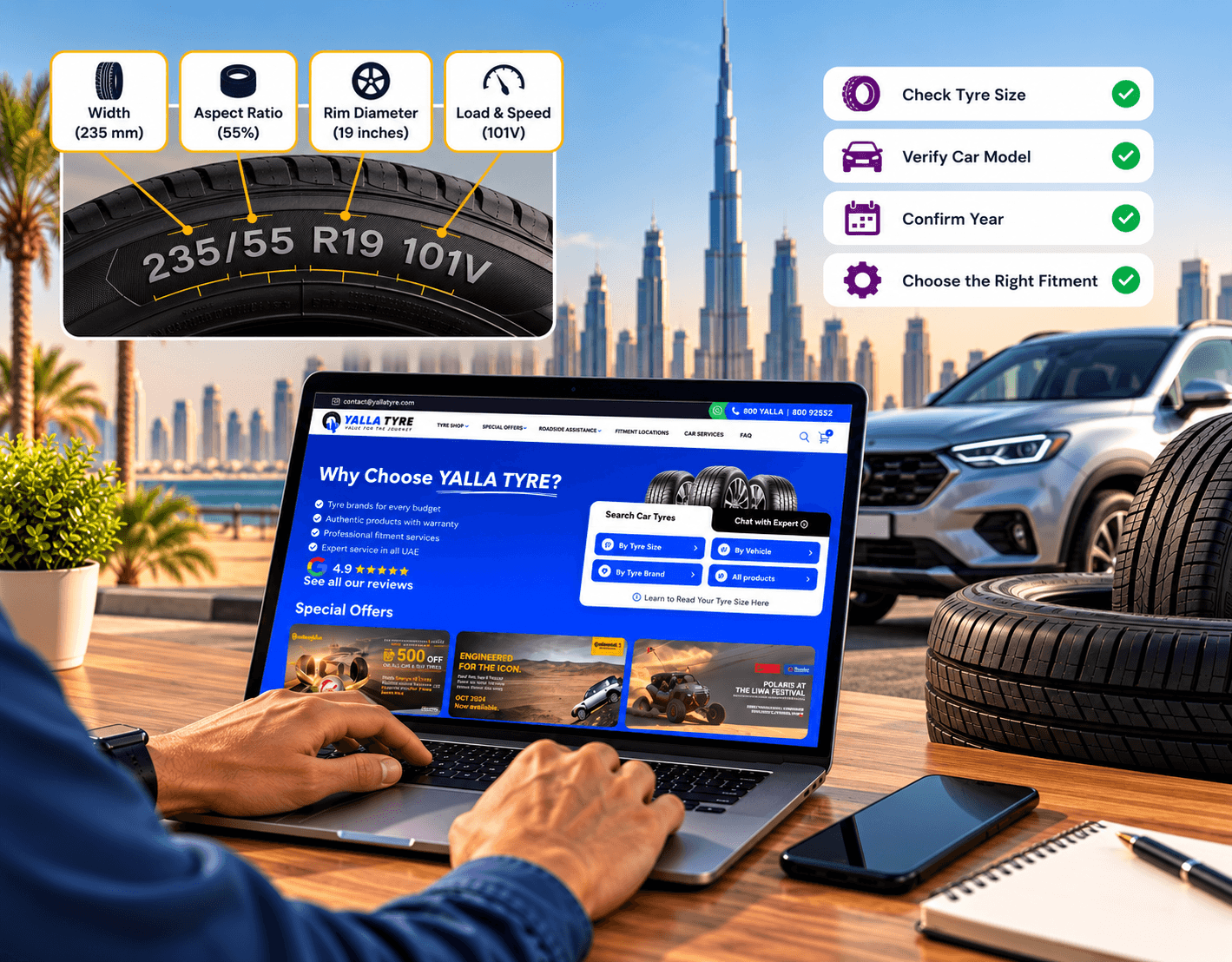
A low-profile tyre has a relatively short sidewall compared with its nominal width. In the size 245/40 R19 tyre, for example, the aspect ratio of 40 means the nominal sidewall height is 40% of 245 mm, or 98 mm.
No single aspect-ratio value universally defines every low-profile tyre. The size code and its aspect-ratio calculation follow Michelin's standard tyre-marking explanation.
Low-profile tyres are commonly fitted to performance cars and vehicles equipped with larger alloy wheels, including some premium saloons and SUVs. Their shorter sidewalls can influence steering response, ride comfort and the tyre’s ability to absorb road impacts. The actual effect depends on the tyre’s construction, the wheel size and the vehicle’s suspension setup.
For example, a 245/45 R18 tyre has a nominal sidewall height of 110.25 mm, while a 245/35 R20 has a nominal sidewall height of 85.75 mm. Both have a nominal width of 245 mm, but the second size has a lower aspect ratio and shorter sidewall. These figures are calculated from the aspect ratios shown in the size codes; actual tyre dimensions can vary by model.
Drivers usually choose them because the vehicle came with them from the factory or because they want a more performance-oriented wheel-and-tyre setup.
A shorter sidewall can reduce sidewall flex during cornering, helping the vehicle respond more directly to steering inputs. The degree of improvement depends on the tyre’s construction and how the vehicle’s suspension and steering are tuned.
A smaller aspect ratio does not, however, necessarily mean more grip. Tyre design, compound, tread pattern, and road conditions still play an important role in grip.
Smaller-profile tyres are commonly paired with larger alloy wheels, which many drivers associate with performance cars.
Before switching to larger wheels for appearance alone, check the complete wheel-and-tyre fitment. The alternative must maintain a suitable overall diameter, meet the required load and speed ratings, fit the wheel width and provide sufficient clearance from the suspension and bodywork.
Low-profile tyres can produce a firmer ride than a comparable setup with a taller sidewall. The tyre sidewall flexes as the wheel passes over small bumps and uneven surfaces, absorbing some of the impact before it reaches the wheel and suspension. A shorter sidewall has less room to deform, so the cabin may feel more road texture.
Reduced sidewall length means less tyre deformation to absorb impact. The cabin can therefore feel more road texture. However, low-profile tyres do not automatically make a vehicle uncomfortable. Cars designed around larger wheels may have suspension systems tuned to balance handling and ride comfort.
A vehicle built with factory 19- or 20-inch-diameter wheels can have a suspension tuned to offset some of the reduced sidewall cushioning. The trade-off is more noticeable when a vehicle not designed for that combination is fitted with larger wheels and low-profile tyres.
A shorter sidewall leaves less tyre material between the wheel rim and the road surface. During a severe pothole or kerb impact, the tyre may compress enough for the rim to strike the obstacle, increasing the risk of wheel damage.
Bridgestone also identifies low-aspect-ratio tyres and their wheels as particularly vulnerable to damage from potholes, road hazards, and kerbs.
When a tyre hits a sharp pothole, the sidewall compresses between the road and the rim. A taller sidewall provides more distance over which that impact can be absorbed. With a low-profile tyre, a severe impact can pinch the tyre and transfer greater force to the wheel.
Possible results include:
Kerb impacts can damage both the tyre sidewall and the wheel edge. A pronounced bulge may indicate that the tyre’s internal cords have broken, rather than just superficial damage to the rubber.
Continental explains that this type of impact damage can occur when a tyre strikes a kerb or speed bump at excessive speed or at an unfavourable angle. A tyre professional should assess any new sidewall bulge.
Incorrect inflation pressure can increase the risk of tyre damage. An underinflated tyre flexes excessively and generates additional heat, which can weaken its internal structure. Overinflation can also increase sensitivity to impacts and contribute to uneven wear.
Check pressure when the tyres are cold and follow the vehicle manufacturer’s recommendation on the tyre placard or in the owner’s manual. Do not use the maximum pressure printed on the tyre sidewall as the vehicle’s recommended pressure.
Yes. Low-profile tyres can suit UAE roads when they match the vehicle’s approved specifications and are maintained correctly. The profile alone does not determine suitability. Correct wheel-and-tyre fitment, inflation pressure, load capacity and the condition of the tyre and rim are all important.
Correct tyre pressure is especially important in high ambient temperatures. Underinflated tyres flex more than intended and can build up excessive heat, increasing the risk of internal damage. Check the cold pressure against the vehicle manufacturer’s recommendation before a long journey, and make sure the tyres are suitable for the vehicle’s load. Michelin identifies overheating and potential tyre damage as risks associated with underinflation.
When comparing tyres in the UAE, do not choose a replacement based on the visible size alone. Check the required load index, speed rating, construction and vehicle compatibility.
Low-profile tyres can be damaged on both motorways and urban roads. Potholes, raised road repairs, steep ramps and parking kerbs can all cause impact damage, depending on the speed and angle of contact. After a significant impact, have the tyre and wheel inspected, particularly if you notice new vibration, pressure loss, steering changes or a visible sidewall bulge. Don't assume the tyre is undamaged just because it remains inflated.
Sometimes, but treat a profile change as a complete wheel-and-tyre fitment decision rather than simply buying a shorter tyre.
Each tyre size is designed for an approved range of wheel widths. A tyre mounted on an unsuitable rim width may not retain its intended profile, which can affect bead seating, sidewall behaviour and handling. Confirm compatibility with the tyre manufacturer’s specifications before fitting an alternative size.
When a vehicle is fitted with a larger wheel, you may use a lower-profile tyre to keep the overall tyre diameter close to the approved specification. However, changing wheel diameter does not automatically make a tyre compatible. The complete fitment must still meet the vehicle manufacturer’s requirements.
The tyre must clear the suspension components, wheel-arch liner and bodywork throughout steering movement and suspension travel. A fitment that looks fine while parked may still rub when the steering is turned, the suspension compresses or the vehicle carries a load.
The alternative tyre should meet the vehicle manufacturer's required load index and speed rating. These specifications are critical even when the tyre physically fits the rim.
Drivers comparing car tyres in Dubai should not choose a replacement based only on width, profile and wheel diameter. The load index, speed rating, and any vehicle-specific requirements must also match.
Routine checks cannot prevent every impact, but they can help you spot problems before they get worse. Check tyre pressure when cold, inspect the sidewalls regularly and avoid striking kerbs. Reduce speed when approaching visible potholes or damaged road surfaces.
After a hard impact, check for:
If you notice any of these signs after an impact, arrange a professional inspection before continuing to use the tyre normally.
Not necessarily in all cases. Low-profile tyres are not always more expensive, but some performance tyres and larger sizes cost more than smaller, standard options. A severe pothole or kerb impact can also add costs if both the tyre and wheel need attention.
When comparing low-profile tyres in the UAE, check the approved specifications, tyre model and total fitted price. Two tyres with the same nominal size can differ in construction, performance characteristics and price.
Choosing the right low-profile tyres means balancing style, handling, comfort and protection against road impacts. Before buying, make sure the tyre size and specifications match your vehicle, then compare suitable options based on your driving needs and budget.
With YallaTyre, you can search for tyres by vehicle or tyre size, compare available brands and arrange fitting through an available installer or mobile fitting service. You can also compare the overall cost of suitable options before deciding.
Explore low-profile tyres on YallaTyre and find the right fit for your car.