October 30, 2026
Low-Profile Tyres in the UAE: Style, Comfort & Rim Damage Explained
Reviewed By
Vehicle Tyre Care Specialist, YallaTyre
Michael Krikken supports YallaTyre's operations, helping customers select genuine tyres suited to their vehicle. He ensures trusted tyre solutions and excellent customer support.
Buying tyres online in the UAE is easy, but the tyre must fit more than just the wheel size. Before ordering, confirm the correct tyre size, load index, speed rating, vehicle fitment, wheel type, and any manufacturer specifications.
Start with the tyre specifications approved by your vehicle manufacturer. Tyres of the same size can have different load indexes and speed ratings, so matching dimensions alone doesn't guarantee correct fitment.
Tyre size refers to the tyre width, aspect ratio, and wheel diameter. The load index is a number code indicating the maximum load the tyre can support under given conditions, while the speed rating is a letter indicating the maximum speed the tyre can support under given load conditions.
The safest place to start is the tyre specification recommended by the vehicle manufacturer.
You can usually find the recommended size in the owner’s manual or on the vehicle’s tyre-information placard. Your current tyres can also be a useful reference, but verify their specifications against the manufacturer’s recommendations, especially if the car is used or the wheels have been changed.
Reading the Sidewall Code
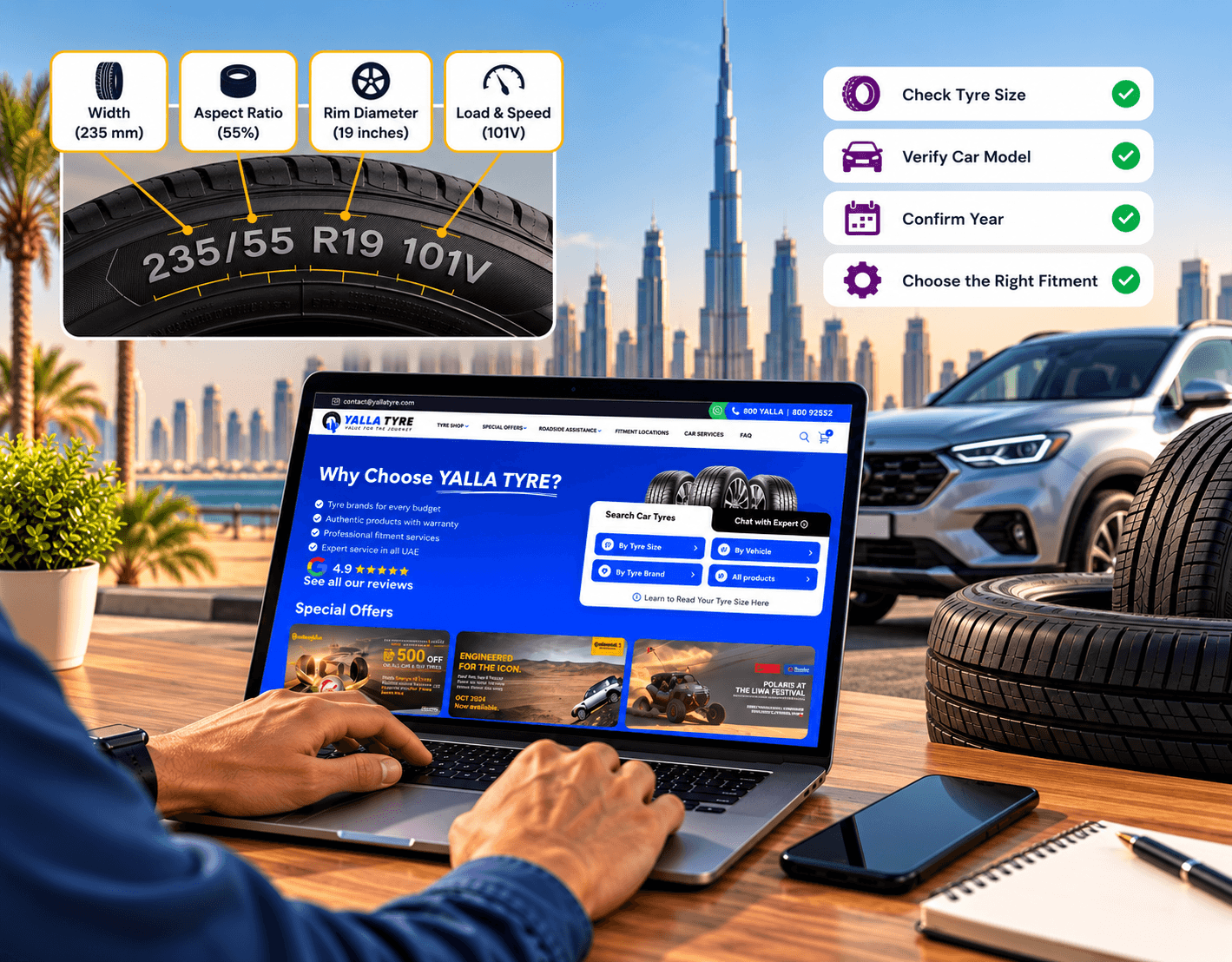
A tyre sidewall marking may look like this: 235/55 R19 101V.
This means:
When you check tyre fitment, compare the complete specification rather than searching only for “235/55 R19 101V”.
The load index must meet the vehicle manufacturer’s requirements. Michelin gives the following examples: load index 91 corresponds to 615 kg per tyre, while index 94 corresponds to 670 kg per tyre. These ratings apply under specified test conditions, and a tyre’s actual suitability depends on the vehicle’s requirements.
Selecting a tyre with a low load rating may make it inappropriate, even if it physically fits the wheel.
SUVs, larger sedans, EVs, and vehicles that frequently transport passengers or luggage can be especially sensitive to the load requirements.
XL and Higher-Load Tyres
XL stands for Extra Load. An XL tyre is designed to carry a higher load than a standard-load tyre of the same size when operated at the applicable specified pressure. Always follow the vehicle manufacturer’s load and tyre-fitment requirements.
The speed rating is shown as a letter that follows the load index. Examples given by Michelin include:
The rating does not mean you should drive at those speeds. It indicates the tyre's speed capability when tested under the given load and operating conditions.
When comparing car tyres, follow the vehicle manufacturer’s required specification rather than choosing a lower rating simply because the tyre is cheaper.
Yes. Certain models are available in several manufacturer-offered tyre sizes based on trim level, wheel size, engine, brake package or suspension configuration.
For example, different versions of the same model may use 17-, 18- or 19-inch wheels, each with its own approved tyre specification.
This does not imply that all of the tyre sizes listed under the same name of the vehicle will fit all the versions of the vehicle.
Front and Rear Size Differences
Some performance cars and SUVs use a staggered fitment, where the rear tyres are wider or a different size than the fronts. In that case, it would be wrong to order four tyres in the front size, even if the site lists that size for the vehicle.
Before buying tyres online, make sure all four tyres match the manufacturer's front and rear specifications.
A tyre can fit the wheel diameter yet be incorrect for the wheel width or vehicle. Two tyres can both be referred to as R18; however, one can be significantly wider than the other.
Each tyre size has a recommended rim-width range provided by the tyre manufacturer. A tyre with an incorrect profile may be mounted on a rim that is too narrow or too wide and will not perform as expected.
The tyre must also have enough clearance from:
A tyre that clears the surrounding components when the vehicle is stationary may still rub against the wheel arch or suspension during steering or suspension movement.
Yes, but treat an online fitment tool as a starting point rather than the final authority.
These tools can narrow your options; however, the owner's manual, tyre placard, and manufacturer-approved specifications remain the best sources.
When an online fitment tool suggests a size that differs from your vehicle's currently approved size, check it before ordering.
Yes, especially when the retailer stocks tyres from more than one production year. The four-digit date code at the end of the tyre’s DOT identification number indicates its production week and year. For example, 2426 means the tyre was manufactured in week 24 of 2026.
The production year is useful information, but it shouldn't be taken in isolation. Also consider storage, tyre condition, specifications, and manufacturer guidance. When comparing tyres online in the UAE, make sure the production year is clearly indicated before completing the order.
Yes, particularly on vehicles supplied with specialised tyres. A run-flat tyre is designed to allow limited driving after a loss of inflation pressure, subject to the tyre manufacturer’s restrictions. It is not interchangeable with a conventional tyre solely because the two share the same size.
Some cars also have OE-approved tyres designed specifically to fit a certain manufacturer or car model. They may carry manufacturer-specific markings.
An OE marking identifies a tyre designed or approved for a particular vehicle application; it does not automatically mean the tyre is run-flat. Likewise, a run-flat tyre is not necessarily OE-approved for your vehicle. Check both requirements separately.
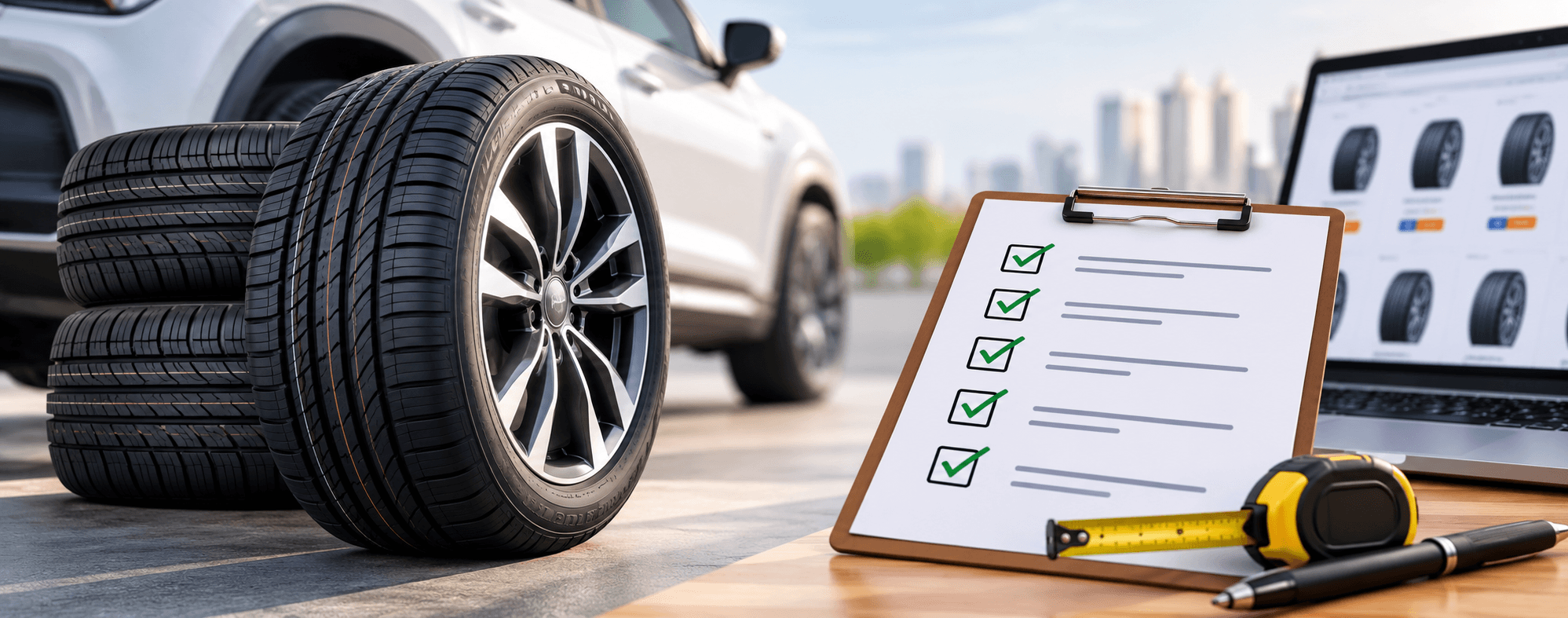
Before placing your order, compare the following details:
The cheapest tyre isn't necessarily the best if it doesn't fit the vehicle. Checking fitment before ordering reduces the risk of receiving tyres that cannot be installed or need to be returned.
Yes, an alternative size may be possible, but it must be checked against the vehicle manufacturer’s specifications and the wheel and vehicle requirements before ordering.
An alternative size must work with the wheel width, overall diameter, load and speed requirements, body clearance and electronic systems such as ABS and stability control.
A tyre-size calculator can help compare dimensions, but it cannot confirm manufacturer approval, rim compatibility, load and speed requirements, clearance, or compatibility with vehicle systems. Use it as a reference tool, not as proof that an alternative size is suitable.
The most common mistake is believing that a single matching number means the tyre will fit. Other mistakes include:
Once you have confirmed your vehicle’s approved tyre specifications, use a retailer that makes it easy to compare suitable options and arrange installation. The right fitment check helps you avoid ordering tyres that have the wrong size, load index, speed rating or front-to-rear configuration.
YallaTyre lets you search for car tyres by size or vehicle make, model and year. You can also select different front and rear sizes where your vehicle requires a staggered fitment. Choose from available tyre brands, select an installer and fitting time, or check mobile fitting availability for your home or office across the UAE. Listed prices include installation, balancing, old-tyre disposal and VAT, according to YallaTyre’s published FAQ.
Before you place an order, verify the full specification against your vehicle’s manual or tyre-information placard. Then use YallaTyre to compare suitable tyres and arrange fitting with greater confidence.