My Account

September 26, 2026
The Tyre Size Upgrade Checklist to Use Before Buying Tyres Online
Reviewed By
Vehicle Tyre Care Specialist, YallaTyre
Michael Krikken supports YallaTyre's operations, helping customers select genuine tyres suited to their vehicle. He ensures trusted tyre solutions and excellent customer support.
Most drivers check tyre pressure and tread depth, but few pay attention to the age of their tyres. In the UAE, ignoring tyre age requirements could lead to inspection failures, fines, or registration issues.
Tyre age requirements and vehicle inspection standards may vary across the UAE. Due to the region's extreme climate conditions, drivers are generally advised to regularly inspect tyre age and follow the latest guidance issued by local authorities and vehicle inspection centres.
Understanding these limits can help drivers stay compliant and avoid inspection issues. This guide explains how tyre age is calculated, when tyres should be replaced, and how to stay compliant with UAE road safety requirements.
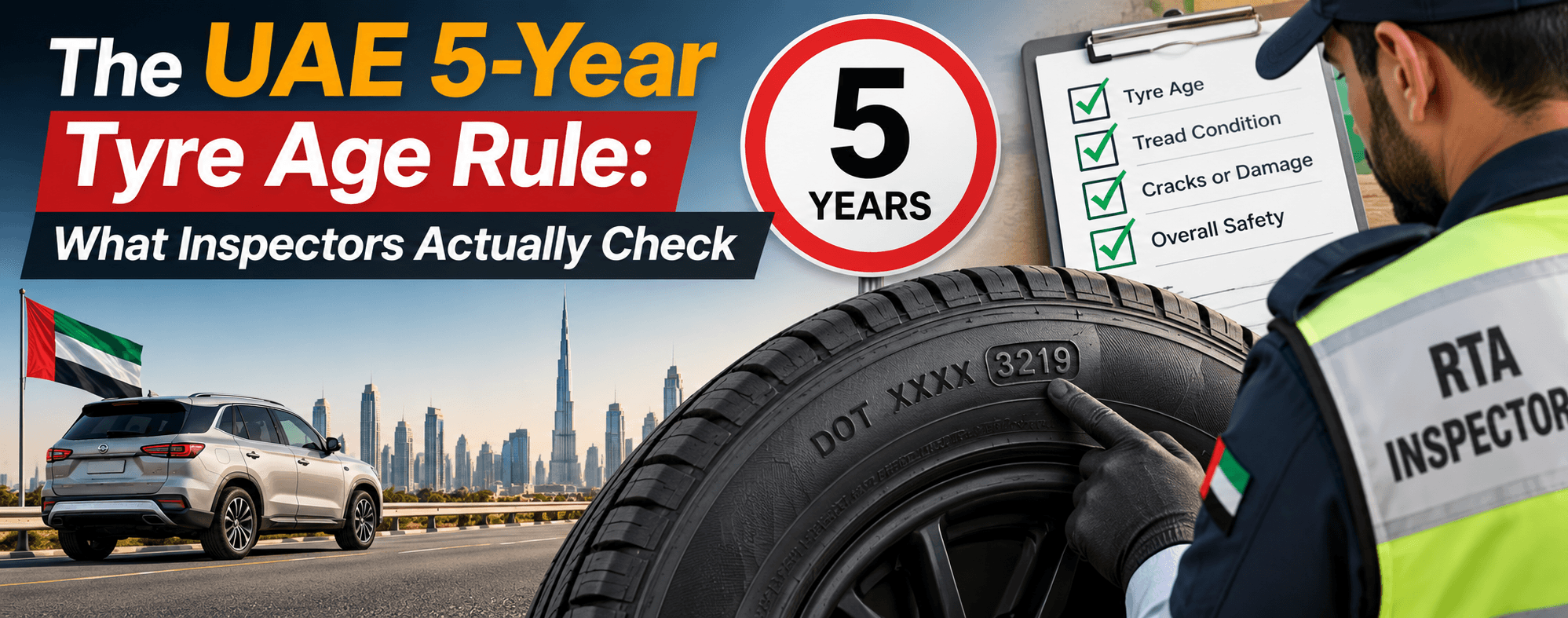
In most UAE emirates, tyres should not be used for more than five years from their manufacturing date, regardless of tread depth, mileage, or appearance. Abu Dhabi follows a stricter three-year guideline due to the emirate's harsh climate conditions, which can accelerate tyre wear and rubber degradation.
But why are these tyre age limits so important? Let's take a closer look.
Tyre age limits exist in the UAE because tyres deteriorate more quickly due to extreme temperatures and harsh driving conditions.
Temperatures exceed 60 degrees in summer and road surface temperatures climb even higher. Rubber compounds break down under sustained heat and a tyre that looks perfectly fine on the outside may already be compromised internally. The heat accelerates oxidation which makes rubber brittle over time, regardless of mileage.
As rubber loses its elasticity, the structural integrity weakens and a sudden blowout at speed is almost always catastrophic. Tire Age Limits targets this risk by taking aged tyres off the road before they become a hazard.
If you drive with expired tyres then your insurance claim could be rejected after an accident. Insurance companies refuse coverage if they determine that the vehicle was not compliant with UAE road safety regulations.
You should replace your tyres in the following situations:
In most UAE emirates, tyres should be replaced once they reach five years from the manufacturing date. Abu Dhabi drivers should follow the stricter three-year guideline to avoid inspection issues and maintain road safety.
During the mandatory vehicle inspection, tyres are checked for age, condition and tread depth. A failed tyre inspection means your vehicle won't get renewed registration until the tyres are replaced.
Cracks, bulges, blistering or exposed cords are automatic grounds for rejection and even a relatively new tyre with visible damage won't pass.
A spare tyre sitting in your boot for six years is still subject to the 5-year rule. Driving on an old spare after a puncture could leave you non-compliant.
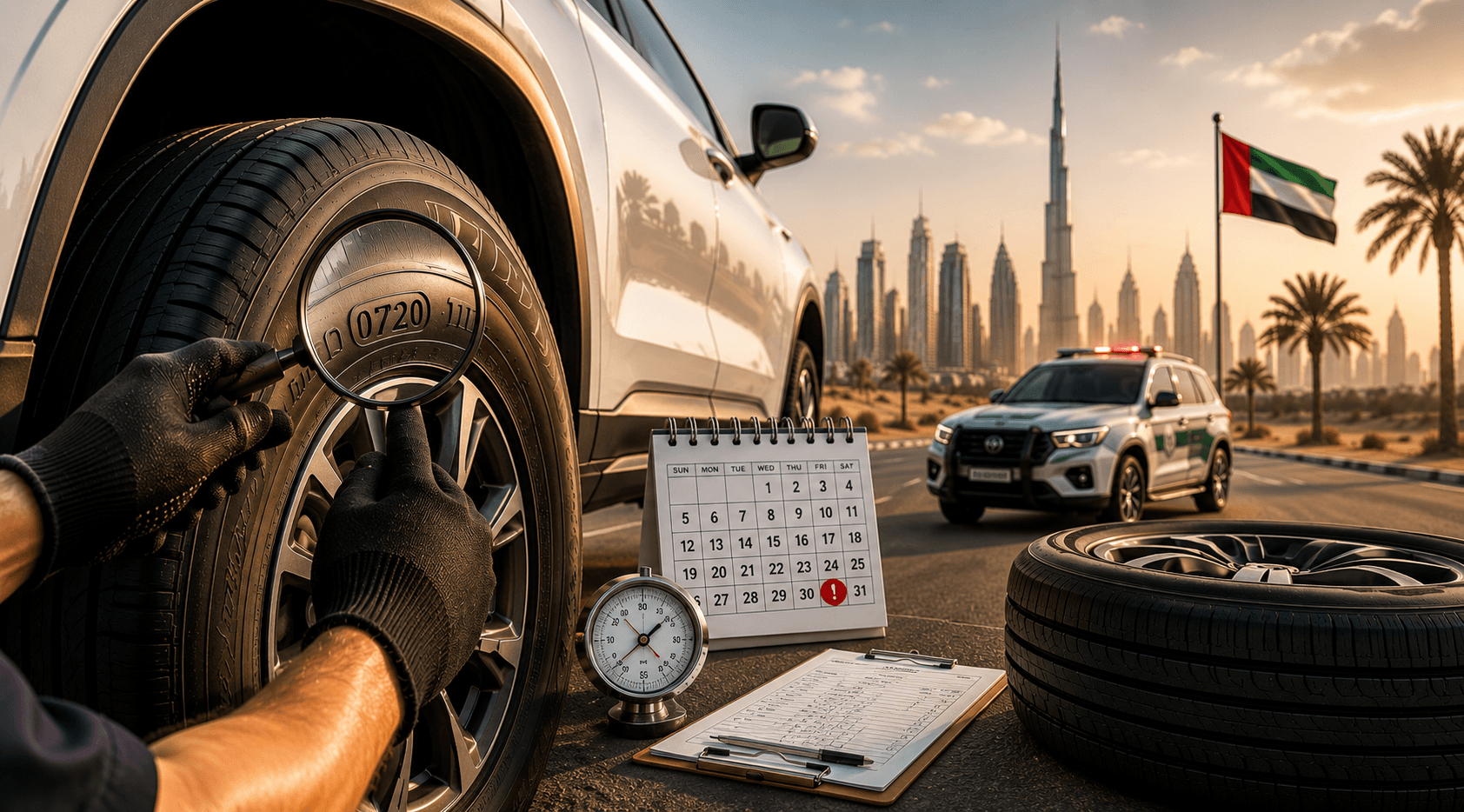
Tyres have a four-digit DOT date code printed on their sidewall. The first two digits show the week of manufacture while the last two digits show the year.
For example, the code 1126 means the tyre was made in the 11th week of 2026. If you find a tyre with a three-digit date code, it was manufactured before the year 2000 and is illegal in the UAE.
Tyre Conditions That Lead To Inspection Failure
A tyre fails inspection if it has visible damage, excessive wear or any issue that affects road safety.
Ignoring the tyre age limit creates safety risks and leads to legal and financial problems.
A few simple habits can help ensure your tyres are replaced at the right time and stay compliant with UAE regulations.
When it's time to replace tires then changing all four tyres together provides better balance, handling and braking performance. It also helps tyres wear more evenly over time.
Use the same brand, model and specifications on all four wheels. Mismatched tyres behave differently under braking and cornering whereas the same tyres improve stability, provide consistent road grip and support safer driving in different conditions.
Before purchasing new tyres, UAE drivers should always check the manufacturing date (DOT code). The newer tyres offer a longer usable life before reaching the applicable tyre age limits in the UAE.
Don't wait for the annual vehicle inspection to check your tyres. Regular tyre checks make it easier to spot wear, cracks or ageing before they become serious problems.
Staying on top of UAE tyre laws is much easier with the right tyre service provider. At Yalla Tyres, our online tyre shop and professional fitting services make the entire process straightforward:
The UAE's tyre age limit rule is designed to keep drivers safe on the road. Ignoring it will lead to inspection failures, fines and even serious tyre-related accidents.
If your tyres are approaching the legal age limit then don't wait until your next inspection. At Yalla Tyres, we provide professional tyre services and expert support.
Need new tyres? Browse top brands, compare options and book a hassle-free tyre replacement with Yalla Tyres today.